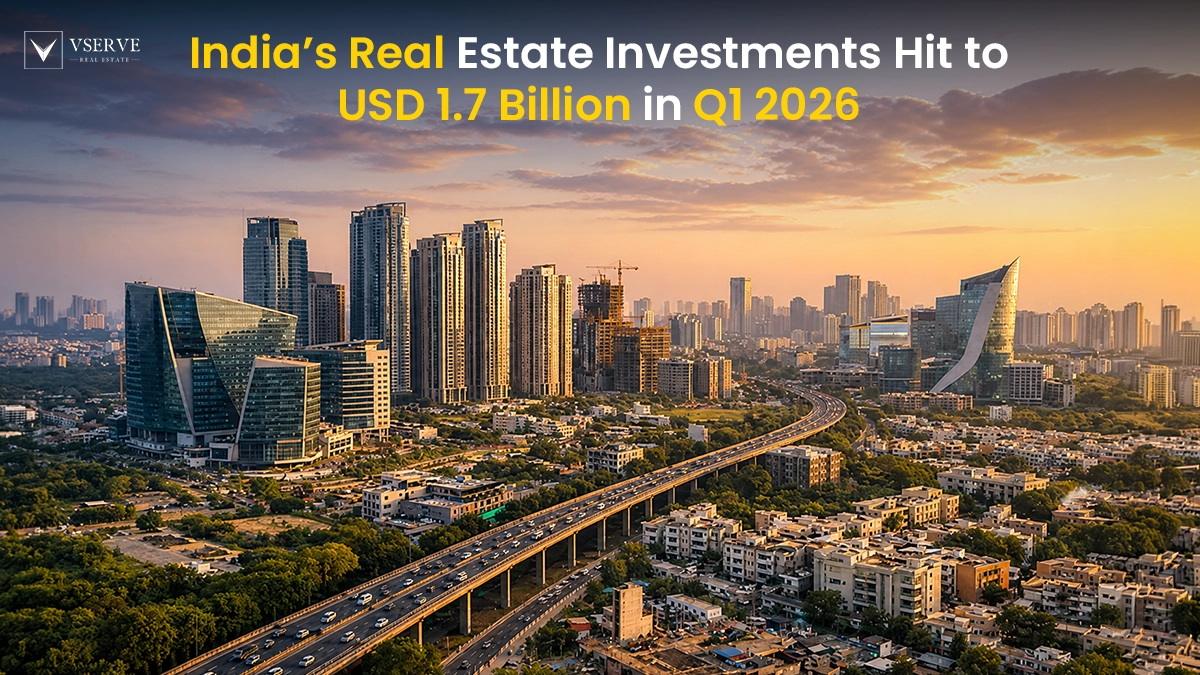
India’s real estate investment activity saw an increase at the start of 2026, with transactions worth USD 1.7 billion in the January–March quarter, according to JLL. That’s a 37 per cent increase from the same period last year.
The rise comes even as global uncertainty continues to slow decision-making in several markets. Deals are taking longer to close in general, but in India, activity has not really stalled.
It stated, "India's real estate investment market has sustained its exceptional momentum into 2026, with first quarter (January–March) transaction volumes reaching USD 1.7 billion."
What stands out more is where the money is going. There has been a clear move towards core assets—typically seen as safer, income-generating properties. Investments in this segment rose 178% to USD 1.03 billion during the quarter.
That shift suggests investors are leaning more towards stability than risk at this point.
The trend seems to be continuing. Early numbers from the current quarter show core asset transactions have already touched USD 1.48 billion. That indicates the preference isn’t just a one-quarter spike.
Lata Pillai, Senior Managing Director and Head of Capital Markets at JLL India, said the sector continues to show strong resilience despite global challenges.
"India's investment market continues to demonstrate remarkable resilience amid global headwinds. The 178 per cent surge in core asset acquisitions reflects a fundamental shift toward stable, income-generating properties, while the office sector's dominance underscores strong operational fundamentals," she said.
JLL’s data also highlights how strong the previous two years have been. Total institutional inflows across 2024 and 2025 reached USD 19.4 billion, the highest recorded so far in India’s real estate market.
Another slow change is starting to emerge. The market is now somewhat less reliant on foreign investment because domestic capital is playing a larger role. Private equity companies accounted for 42% of domestic institutional investments, while REITs and InvITs provided USD 2.8 billion, or 47%.
The general direction appears stable for the time being. The economy is comparatively stable, infrastructure spending is continuing, and investor interest has not decreased. In fact, if global volatility persists, the increased local participation may serve as a buffer for the industry.
For more information, get in touch with us at Vserve Real State India