Whenever global markets get shaky, real estate is usually one of the first places where caution shows up. Deals slow down. Buyers wait. Investors start second-guessing timing.
Dubai has gone through those phases too. But if you look closely, it doesn’t stay stuck there for long. The market adjusts, finds its footing & then activity starts picking up again.
That pattern has repeated more than once. And it comes from how the city is built, not just how the property sector behaves.
What Actually Supports This Stability
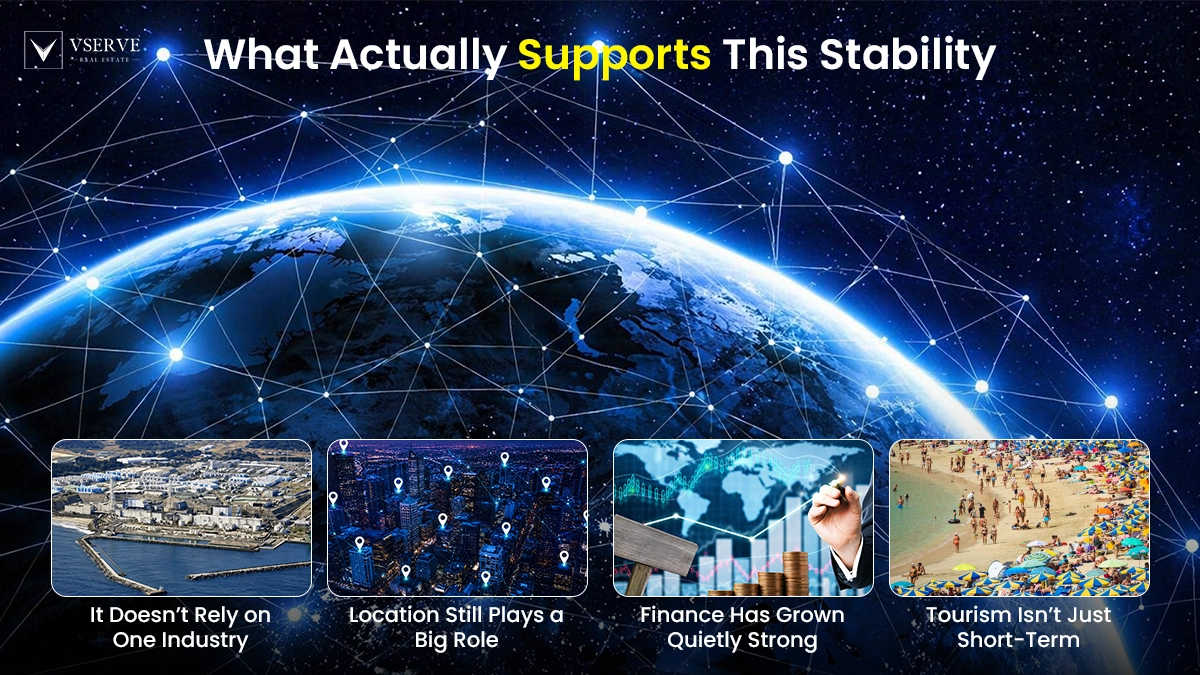
There isn’t one single reason behind Dubai’s resilience. It’s more like a system where different parts keep things moving even when one side slows down. You can check the reasons below:
It Doesn’t Rely on One Industry
Some cities depend heavily on a single sector. When that sector struggles, everything else feels it immediately.
Dubai works differently. Tourism, aviation, finance, logistics, trade — all of them run in parallel. If one dips for a while, the others still bring in people & business.
That movement matters. People relocating for work, companies setting up offices, entrepreneurs entering the market — all of this keeps demand alive for homes, rentals & commercial spaces.
Location Still Plays a Big Role
Dubai’s geography isn’t just a map advantage. It shapes how business flows through the city.
Being positioned between Asia, Europe & Africa makes it a natural meeting point. Trade doesn’t fully pause even during slower global cycles. Ships still arrive, companies still operate & decisions still get made here.
That ongoing activity feeds into the real estate side more than it seems at first glance.
Finance Has Grown Quietly Strong
Over time, Dubai has built a serious financial presence, especially through the Dubai International Financial Centre.
What this does is simple — it brings in institutions that think long-term. Banks, investment firms, asset managers. When these players enter a market, they don’t react to short-term noise as quickly as others might.
That creates a steadier layer of demand underneath the usual buying & selling.
Tourism Isn’t Just Short-Term
Tourism in Dubai isn’t limited to quick visits.
Yes, millions of people come for a few days or weeks. But a portion of them end up staying longer, returning frequently, or even considering property ownership.
That overlap between visitor & resident demand keeps different parts of the market active — from short-term rentals to long-term housing.
Looking Back at How the Market Reacted
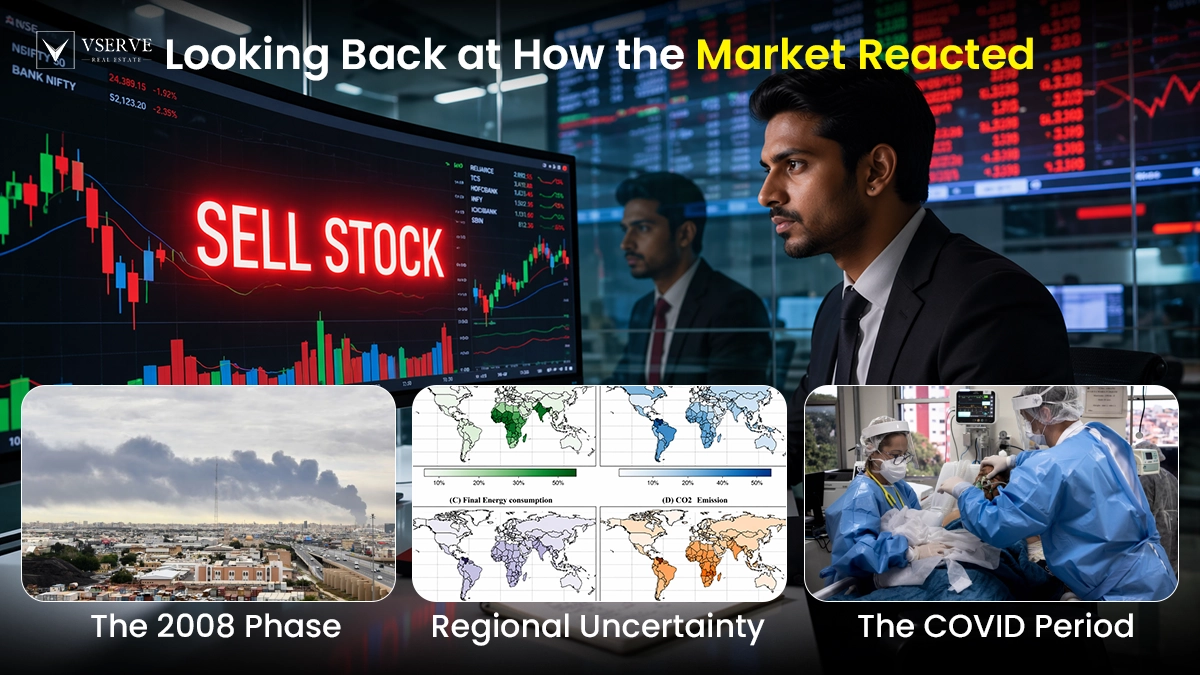
The real picture becomes clearer when you look at how Dubai handled past disruptions.
The 2008 Phase
The global financial crisis did hit Dubai. Prices corrected & there was a visible slowdown.
But it didn’t turn into a long freeze. Projects resumed, policies evolved & investors gradually came back. Within a few years, activity had stabilised & confidence returned.
Regional Uncertainty
Despite being in a region that often sees geopolitical tension, Dubai itself has remained relatively steady.
Clear policies, strong internal systems & a focus on safety have helped maintain that stability. Investors tend to notice that distinction.
The COVID Period
The pandemic slowed everything down at first. That part was unavoidable.
What stood out was the pace at which things restarted. Travel came back, businesses reopened, & transactions picked up again sooner than expected.
While many cities were still dealing with prolonged slowdowns, Dubai had already started moving again.
Final Words
Dubai’s real estate market isn’t immune to global events. It reacts like any other market would.
The difference is in how long it takes to recover. Historically, it has adjusted faster & returned to activity without dragging uncertainty for years.
For investors, that consistency matters more than short-term ups & downs. It shows how the market behaves when tested — and that tends to be more valuable than performance during stable periods.
For more information, get in touch with us at Vserve Real Estate Dubai
Frequently Asked Questions about Dubai Real Estate Industry:
Q1. How big is the real estate industry in the UAE?
A1. The UAE real estate market is valued in hundreds of billions, contributing significantly to GDP & investment inflows.
Q2. Who is the big 4 in real estate?
A2. The “Big 4” in UAE real estate typically refers to Emaar, DAMAC, Nakheel, and Dubai Properties.
Q3. Is Dubai real estate a good investment during global uncertainty?
A3. Yes, strong demand, global investors & government support make Dubai resilient during uncertain periods.
Q4. What drives long-term demand for property in Dubai?
A4. Population growth, tourism, global business activity & investor-friendly policies drive sustained demand.
Q5. Can foreign investors fully own property in Dubai?
A5. Yes, foreign investors can own freehold property in designated areas with full ownership rights.